Can we afford to get lost anymore? Can we afford not to?
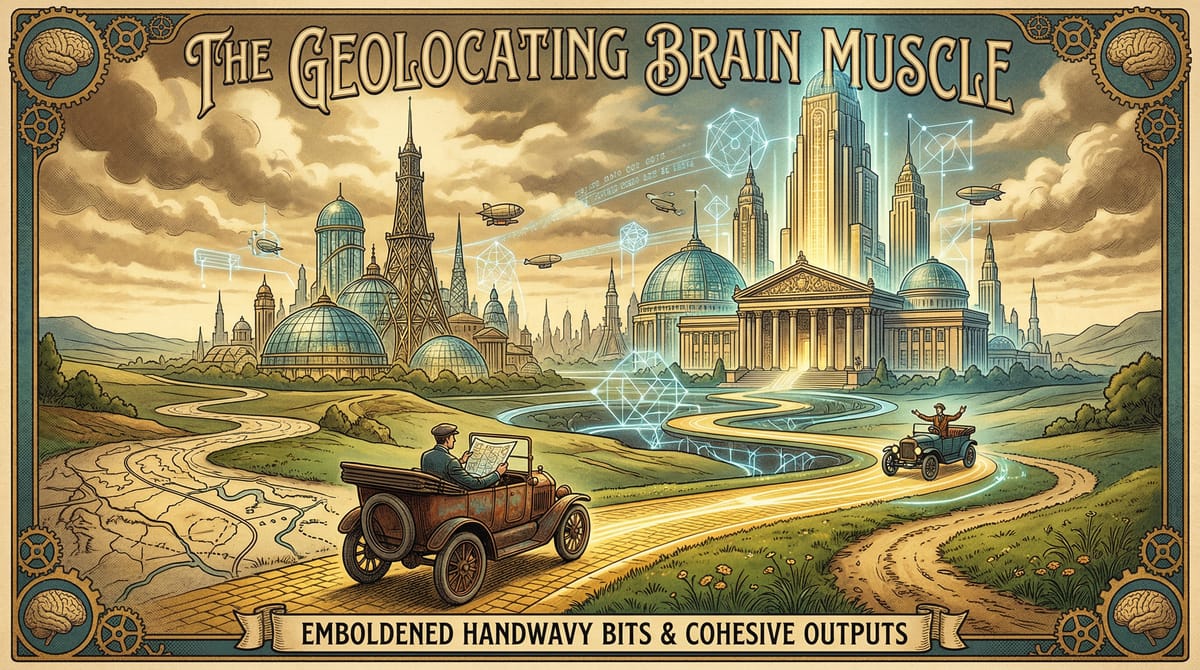
I remember life before phones and Google Maps. Even before MapQuest, we all used to get lost a lot more. Back then, I’d stop at random gas stations to ask for directions, and my knowledge of highways, city streets, and far-flung roadways was actually pretty decent.
But of course, MapQuest arrived on our PCs in the early 2000s. We could look up driving directions ahead of time, printing out our routes and killing trees with glee (I still love printing). Quickly, though, the computer came to our pockets, bringing the promise that we’d never have to be lost again.
Now, AI and the Agentic future are making a similar promise: that we will never have to toil with the mundane again. I can already feel the glee as I whisk through the monotonous parts of my job with a simple prompt but I can also feel parts of my brain atrophy while the handwavy bits become more emboldened.
I still get lost driving around more than most. I stubbornly won't punch in directions to destinations I'm "reasonably sure" I can navigate on my own. It might be a dash of hubris, but I like to tell myself I'm keeping my geolocating brain muscles in shape by exercising them on occasion.
As a society, we don’t have as much tolerance for getting lost as we used to, what with the world in our pocket computers. It’s not nearly as acceptable to tell someone you were late because you were given the wrong directions. We can’t afford to be late, but it makes me wonder: can we afford not to be lost on occasion?
AI in the workforce is upping the expectations of our outputs, but we still need to invest in our baseline skills in order for those outputs to be cohesive. This requires us to be more deliberate in how we exercise our brains, getting lost as much as is allowed and investing in our brain health. When functioning, that mental muscle is still a significant advantage over the robots' mass outputs.